There was a period in the early 2000s when I quietly walked away from surf journalism without fully understanding why.
At the time, I told myself I needed to be practical. I was putting money, time, and effort into surf journalism, and it wasn’t paying off. I needed a real job. So I focused on digital marketing, specifically SEO.
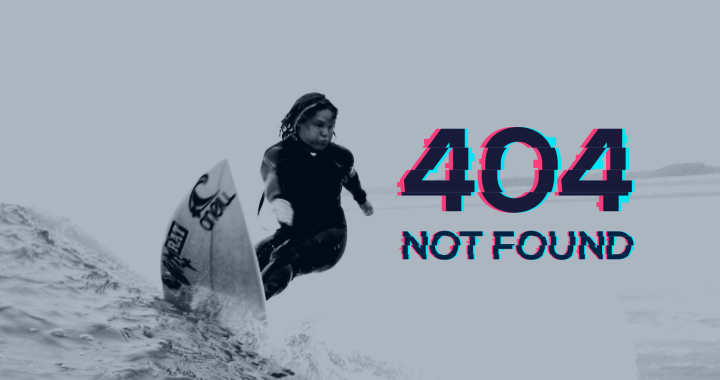
I poured myself into SEO and digital marketing while my digital files, print copies, slide film, and interviews slowly disappeared into closets, storage bins, and expired domains. Online, my published work was effectively unpublished, replaced by 404 Page Not Found errors and 500 Internal Server Errors.

But looking back on my work has resurfaced some old feelings; I realized I didn’t think my work was good enough, and the inner critic told me to quit, to move on. I wasn’t just revisiting the work. I was revisiting the younger me who made it.
I found myself face to face with that younger version of myself, and I told her, your work is good. Really good. You were good at this.
I wish she could have known that then. On some level, I did know.
And then I started reflecting and revisiting why I did that, why I stopped photographing and storytelling. Because the current version of myself was impressed with the work I had done.
Back then, I was deeply immersed in surf culture. I competed, traveled, documented stories, interviewed surfers, and spent years inside the world I cared about most. I covered women’s surfing during a time when it still felt largely overlooked by mainstream surf media. I wasn’t coming at it academically or from the outside. I didn’t just live it. I’m part of the community I’m documenting, one of the female surfers whose stories I tell.
Around the same time, I was taking women’s studies and gender studies courses in college. I remember learning about systemic bias and institutional gatekeeping while simultaneously watching it play out around me in real time.
Looking back now, I can also see how perfectionism became part of my survival strategy during that time. It felt like women in surf media were constantly being measured against men who had easier access to resources, mentorship, opportunities, and institutional support.
I watched men move into positions of authority and opportunity with a kind of ease I couldn’t understand then. Friends hired friends. Networks expanded quietly through male relationships. Certain voices were automatically seen as credible. Meanwhile, many women around me, including myself, were working twice as hard just to move from invisible to visible. And sometimes staying invisible. It almost felt like they didn’t want us to be seen.
I remember feeling exhausted by it long before I had language for that exhaustion.
The bar felt impossibly high. I internalized the idea that every story, every interview, every photograph had to prove I deserved to be there. And even then, it rarely felt like enough.
At the time, my boyfriend had no experience in professional surfing, yet he ended up getting a job within the industry through connections at the ASP. The man who hired him knew both of us, which made it hit even harder.
It wasn’t that I didn’t want him to succeed. I had invested so much time, energy, and effort into surfing and storytelling, and suddenly it felt meaningless.
I was still working shifts at a sushi bar while watching opportunities pass by that seemed inaccessible no matter how much lived experience or perspective I brought to the table.
It’s that gut-punch feeling. That feeling of all your blood draining from your body.
Eventually, something inside me just went quiet.
I think a lot of women of all backgrounds have experienced versions of this, not just in surfing but across many industries. You start asking yourself a dangerous question: Why keep fighting to belong in spaces that don’t seem to want you there?
And slowly, without announcing it, you redirect your energy elsewhere.

I thought surfing and storytelling were my path. I had done what we were told would lead to success: gone to college, worked hard, built experience. But the reward wasn’t coming. I was watching someone else receive an opportunity I had spent years preparing for. I was being rejected, and eventually, I redirected myself.
For a long time, I carried this quiet belief that maybe my work simply wasn’t good enough.
These were good stories. These women were incredible surfers. Their lives, careers, and perspectives deserved documentation and visibility. The images matter. The interviews matter. The people inside them mattered. And I think that realization carries a certain heartbreak with it because so much important work by women quietly disappeared under the weight of institutional bias, lack of support, financial instability, and cultural gatekeeping.

Over the last year, I’ve started revisiting old interviews, photographs, and unpublished work from that chapter of my life. Some of it had vanished from the web entirely through expired domains, broken links, and internal server errors.
Some of it consisted of photographs and stories that were never published at all. Work that sat unseen in boxes, folders, hard drives, and archives for years, waiting to resurface and finally see the light of day. And some of it feels like reconnecting with a younger version of myself who genuinely believed these stories mattered.
I decided to stop gatekeeping myself.
That new energy was the spark that ignited republishing my lost work to my personal website and resharing pieces across Instagram and social media, inviting people into the process as “collaborators” on Instagram in rebuilding a fragmented archive. The response has been overwhelming in ways I never expected.
People have been coming out of the woodwork remembering surfers and moments that had completely disappeared from public conversation. Former editors, photographers, surfers, and shapers have been reaching out with stories of their own.
One former women’s editor commented that when the Surfline moved the women’s channel and pages broke, that it felt “like her career never existed.”
Others have responded with comments like, “I remember her, she rips,” or “She was before her time.”
That reaction alone says something important.
It reveals how much women’s surf history lived unofficially in memory instead of formal archives. How many contributions were felt deeply by communities but never fully preserved by the industry itself. And how hungry people still are to reconnect with these stories once they re-emerge from beneath the surface.
In a strange way, this retrospective process has become healing. Not because it erases the disappointment of that era, but because it allows me to finally witness the value of the work outside the approval systems that once made me doubt myself.
That’s part of what systemic sexism does. It doesn’t always block people outright. Sometimes it slowly convinces them to shrink. To redirect themselves. To stop raising their hand. It creates emotional and financial scarcity where people begin competing for tiny pockets of validation instead of lifting one another up.
What feels hopeful now is that the landscape has changed. Independent publishing exists in ways it didn’t before. Gatekeepers hold less control. More voices can document culture from the inside instead of waiting for permission.
But I also think it’s important not to forget what women had to push through to get here, or how many stories disappeared quietly along the way.
Maybe the part of reflecting is realizing that the dream itself never fully disappeared. It just went deep underwater for a while, pulled beneath the surface under the weight and pressure of trying to stay afloat in spaces that often made me feel unseen.
And maybe that’s what this process really is: resurfacing.
Resurfacing old stories. Old photographs. Old interviews. Old emotions I didn’t fully understand at the time. Revisiting the people, places, and moments that helped shape an entire generation of women’s surfing, even when much of that history was undocumented, overlooked, or quietly erased.
Because these stories are worth preserving.
Not just for nostalgia, but for context. For visibility. For the next generation of surfers, storytellers, and creatives trying to understand where they come from and what women before them had to push through just to be seen.
I want to invite people to follow along as I continue uncovering this work and sharing it publicly. Some of these pieces survived in boxes. Some survived on old hard drives. Some barely survived at all. And some only exist now in memory.
But they still matter.
The women in these images mattered. The voices in these interviews mattered. The experiences mattered.
Let this be a reminder not to shrink yourself and keep telling the stories, because they matter and they are not small.

